
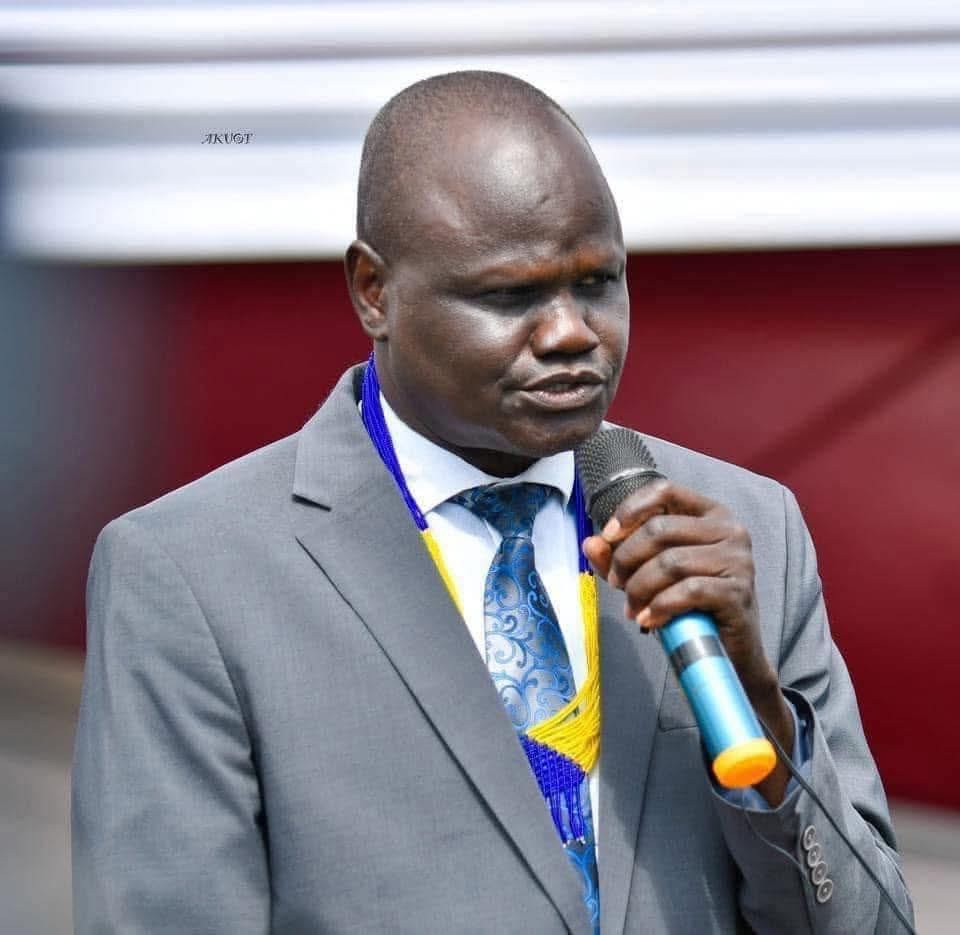
Lawyer Kiir Cho Deng | Photo Credit: Akuot John |
A legal battle over who has the authority to grant bail in South Sudan has reached the Supreme Court, the country’s highest judicial body, following applications seeking the release of Hon. Kom Kom Geng, Hon. Ayii Ayii Akol, and Mrs. Achan Agoth Akiec.
The application, filed by KIIRDIT & Co. Advocates, challenges the continued detention of the three individuals, whose lawyer says they have been held incommunicado for an extended period without grating bail or trial.
According to court documents, Counsel Kiir Chol Deng said both the High Court and the Court of Appeal declined his application for bail, prompting him to petition the Supreme Court to determine whether the authority to grant bail rests with the courts or with the Directorate of Public Prosecutions (DPP) under the Ministry of Justice and Constitutional Affairs.
The legal dispute is centered on the duty of a judge to interpret statutory and constitutional provisions in order to avoid inconsistency and to arrive at correct interpretation as to who has authority to grant bail
Counsel Kiir Chol argues that:
- Bail is a constitutional right of every accused person under Article 19(4) of the Transitional Constitution of the Republic of South Sudan, 2011 (as amended), and that the authority to grant bail rests exclusively with the judiciary and courts of law.
- The High Court and the Court of Appeal maintain that the power to grant bail lies with the Directorate of Public Prosecutions (DPP) under Section 127(2) of the Code of Criminal Procedure Act, 2008.
- The Constitution is the supreme law of the land, and therefore Article 19(4) prevails over Section 127(2) of the Code of Criminal Procedure Act whenever there is a conflict between constitutional and statutory provisions, the constitutional provision prevails.
According to Counsel Kiir Chol, before South Sudan’s independence on July 9, 2011, bail was commonly granted by state attorneys under the Ministry of Justice. However, following independence and the adoption of the Transitional Constitution, he argues that the authority to grant bail shifted to the courts.
Counsel Kiir Chol Deng further argued that the uncertainty over who has the authority to grant bail has contributed to overcrowding in prisons across South Sudan, with many suspects allegedly remaining in detention for prolonged periods without investigations being concluded or bail being considered.
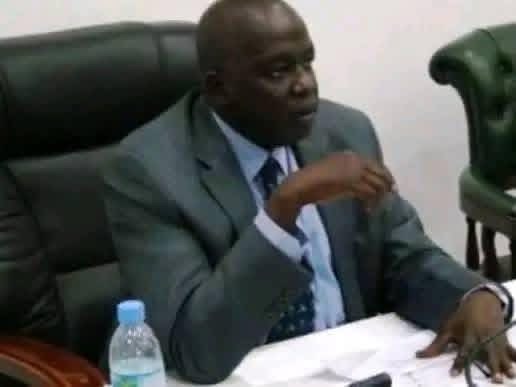
Hon. Kom Kom Geng | Photo Courtesy: Facebook |
Citing Article 19(4) of the Transitional Constitution, which guarantees an accused person’s right to apply for bail, and Article 19(5), which requires that an arrested person be brought before a court within 24 hours, the lawyer questioned whether it is constitutional for accused persons to remain in detention beyond that period without being investigated, formally charged, or considered for bail. He said the Supreme Court’s decision could provide much-needed clarity on South Sudan’s bail procedures and the rights of detainees.
Hon. Kom Kom Geng, who serves as the Chairperson of the Security Committee in the Transitional National Legislative Assembly, is accused of allegedly forging the signature of President Salva Kiir Mayardit. However, the allegations have not been proven before any competent court of law.
According to sources familiar with the matter, Hon. Kom Kom Geng and Hon. Ayii Ayii Akol had earlier proposed that President Salva Kiir releases detained government officials, citing the need to create a conducive and peaceful environment ahead of the country’s anticipated elections.
The sources claim that the proposal was accepted and approved by the President. However, what transpired afterward and how the matter allegedly evolved into a forgery case remains unclear and has not been independently verified by Twic Media Reports. It’s also remains unclear how Mrs. Achan Agoth Akiec is implicated in this case when is not a member of parliament.
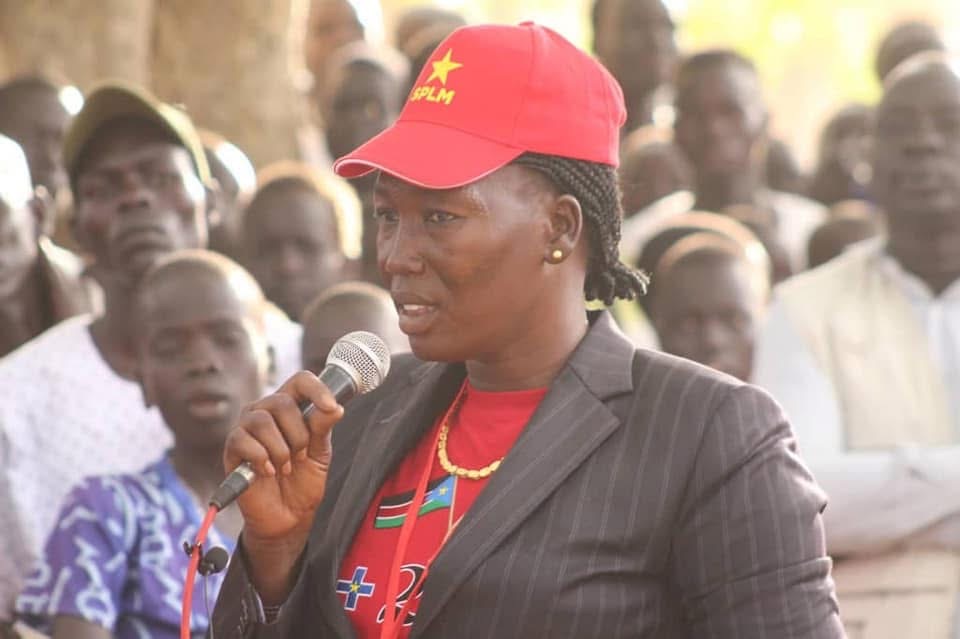
Mrs. Achan Agoth Akiec | Photo Credit: Facebook |
However, the High Court and the Court of Appeal maintain that the authority to grant bail rests with the Directorate of Public Prosecutions (DPP) under Section 127(2) of the Code of Criminal Procedure Act, 2008. The Supreme Court is now expected to determine the proper legal authority responsible for granting bail in South Sudan.
Editor’s Note: The allegations against the accused persons remain before the courts, and all individuals are presumed innocent until proven guilty in a competent court of law.