
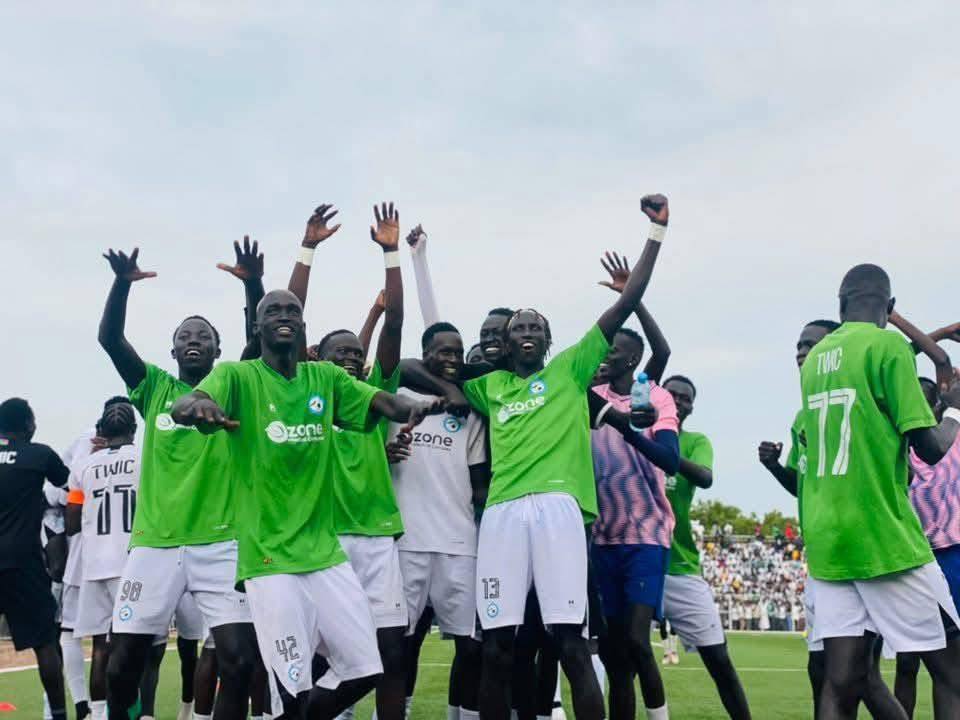
Twic and Abyei players celebrating together after the match at Juba National Stadium
By Marko Makat
The Twic and Ngok communities, long considered sisterly relatives bound by culture and kinship, have in recent years found themselves locked in a land dispute that has cost lives, displaced families, and damaged trust. To outsiders, it may appear as though both groups are unwilling to embrace peace, but community voices insist this is a misjudgment.
While many peace advocates call for reconciliation, insiders stress that such appeals often overlook the root cause of the problem, the unresolved land question. The match that was played at Juba National Stadium ended peacefully in favor of Twic after a very dramatic penalty shootout, and both teams, including their fans, celebrated together.
Calls for Truth and Resolution
According to Buk Dau Buk, a member of the Twic Mayardit community, the real problem lies not in the hearts of the two groups but in the government’s failure to resolve the land issue.
“Twic and Ngok are not against peace,” he explains. “They are simply misunderstood. What both communities desire most is for the government of South Sudan to tell the truth and resolve the land dispute. If that happens, they can return to their normal lives without seeing each other as enemies.”
He cautions that repeated appeals for peace, while well-intentioned, will remain incomplete without a genuine settlement from Juba. For many, this is seen as the only pathway to lasting reconciliation.
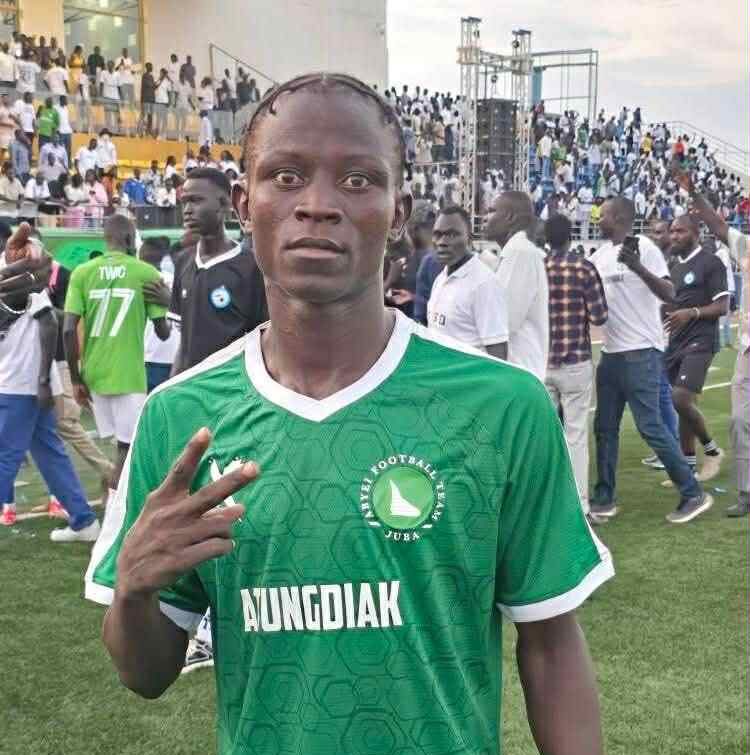
Twic Mayardit Capital Cyer Bol wears Abyei’s captain’s jersey after the duo exchange their jerseys as a sign of peace and the spirit of sportsmanship.
A Peaceful Match in Juba
Amid these challenges, a recent football match presented a different picture of Twic–Ngok relations. As part of the Bahr el Ghazal Peace Tournament, teams from Abyei (Ngok) and Twic met at Juba National Stadium in what was widely viewed as a symbolic test of unity.
Fears of unrest proved unfounded. The game was competitive but peaceful, drawing thousands of fans who celebrated the spirit of sportsmanship. The turnout was described as one of the largest for a community peace tournament, demonstrating broad public support for reconciliation efforts.
“From the very beginning, many from Twic and Ngok believed the game would end peacefully,” said Aguer Atem, former Mayardit FM journalist. “And it did, showing that despite differences, the two communities can coexist.”
Atem stressed that, although a few fans took to social media with divisive remarks, these were quickly condemned. One individual even issued a public apology in a live broadcast—an unusual but welcome gesture of accountability.
Sports as a Symbol of Unity
For Aguer Atem, the peaceful match was significant. “Despite the disputes, the relationship between Twic and Ngok cannot be torn apart in a single event,” he reflected. “Football has shown us that peace and unity are still possible.”
The event also underscored the role of leadership in peacebuilding. Businessman Kur Ajing Ater, who supported the game, was praised for helping create a platform where reconciliation could be expressed through sport.
Ater, rented Juba National Stadium and moved the Twic-Abyei game from its original venue for the safety and control of the fans and long-held fear of anxiety and nervousness over the anticipated match.
The Path Ahead
The members of two communities agree that while football and other community initiatives can inspire, the long-term solution rests with the government. Without a clear and truthful resolution to the land issue, peace efforts risk remaining temporary.
Still, the Juba match offered hope. It demonstrated that ordinary citizens, when brought together in a spirit of fairness and respect, can set aside divisions. For many in attendance, it was a reminder that Twic and Ngok remain bound by family ties and a shared desire for stability.
The challenge now lies in translating these moments of unity into lasting peace—through truth, justice, and political will by the regime in Juba.